


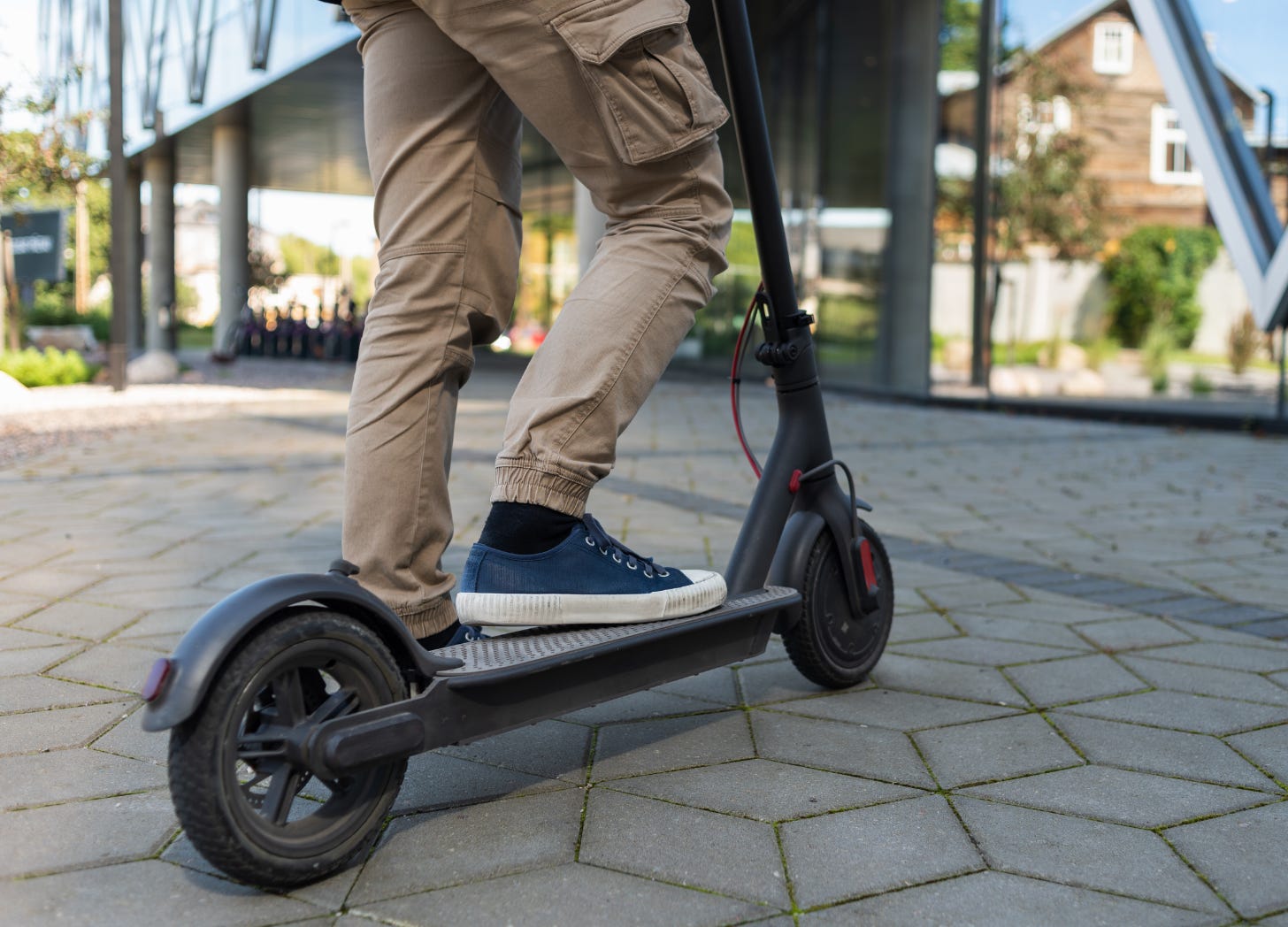
The day after Christmas, my neighborhood looked like a COTA test track run by Haas peewee drivers who just figured out how to steer. Kids on brand-new bikes, scooters, and sketchy electric whatevers were flying down the street on their maiden voyages. I was driving through thinking, How fun is this? Quickly followed by, Didn’t Santa deliver helmets, too?
At first, I figured it was post-holiday bliss—a one-day free-for-all. New gear, empty streets, sugar highs. Made sense. But what looked like a fluke turned out to be business as usual. Not wearing helmets wasn’t a glitch—it’s the norm now.
I’m not talking about the occasional kid who “forgot” their helmet in the garage—or wherever helmets go to be ignored. I’m talking about a full-blown, helmetless uprising.
These kids—many clearly unfamiliar with the capabilities of their shiny rides—are zipping around like stunt doubles in a Fast & Furious movie, weaving between sidewalks and roads, blowing through stop signs, cutting blind corners, and wobbling at speeds better suited for the Tour de France.
I’m not sure how I missed it before. But since then, I can’t unsee it. Every weekday at 3:30, the school bell rings, and our suburban streets turn into a high-speed, low-awareness obstacle course. Dozens of kids, heads completely unprotected, launch themselves into traffic like it’s a group trust fall.
Except no one told the drivers they’re participating.
Did I miss the memo where helmets became optional? Was there a TikTok trend I somehow skipped? Because just a few years ago, helmets weren’t “suggested.” They were expected. From age 4 to 16, every visit to the pediatrician followed the same drill: stranger danger, gun safety (we’re in Texas), and “wear a helmet—no exceptions.”
And now? It’s like parents have collectively decided: You know what? Brains are probably overrated.
But we know better.
We’ve learned more about traumatic brain injuries (TBIs) in the last decade than in the previous century. We now understand that even mild concussions can have long-term effects on developing brains. We’ve watched football, cycling, and military communities reckon with the irreversible toll of repeated head trauma. So why are we acting like our kids are somehow immune? (See: CDC, NIH, Boston University CTE Center.)
But here’s my real issue—
You want to let your kid ride without a helmet? Fine. That’s your parenting hill to die on. But when your helmetless child barrels into the road while my 17-year-old is behind the wheel—new to driving, responsible, but understandably human—that’s when your choice stops being yours and starts becoming mine.
We didn’t sign up for that. Not me. Not my teenager.
Let’s look at it from a different angle. If you want to let your kid climb your 80-foot oak tree without supervision, go for it. I think tree climbing builds grit. But don’t send him into my yard, uninvited, to scale my tree, fall, break his neck—and then expect me to foot the bill and carry the trauma.
Because that’s what this is. It’s not about freedom—it’s about shared risk. The moment your child enters public space—moving at 20 mph, no helmet, no training, and zero fear—that choice sends out ripple effects. On drivers. On emergency responders. On neighbors.
On your kid’s future.
And on mine.
If my teenager accidentally hits your child, we don’t just live with the legal aftermath. We live with the emotional one. The guilt. The what-ifs. The sleepless nights. You may face a nightmare no parent should endure. But we’d live with the guilt of causing it—accidental, but entirely preventable.
Somehow, we’ve romanticized “free-range childhood” to the point of negligence. Don’t get me wrong—I love independence. I want kids to explore, take risks, and fall occasionally. That’s how you build resilience. But there’s a difference between healthy risk and reckless disregard. Sending a 10-year-old out on an e-bike—helmetless, weaving through traffic—isn’t gritty parenting. It’s gambling.
Helmets work. They reduce the risk of serious head injury by 60–70%, according to consistent findings from the CDC, the Cochrane Review, and the American Academy of Pediatrics (CDC, 2022; Olivier & Creighton, 2017; AAP, 2021).
We’d never let our kids ride in a car without seatbelts—so how did we get to the point where protecting kids’ brains feels like overkill?
Are we afraid of confrontation? Tantrums? Not being “the chill parent”?
Maybe parenting isn’t supposed to be chill. Maybe it’s about making the hard calls, enforcing the annoying rules, and caring more about your kid’s brain than their vibe.
So yes, I’ll continue to be that person—silently screaming to myself Where’s your helmet? in my car like a deranged crossing guard, no whistle, and too many feelings.
Because your kid isn’t more important than mine. And I cringe to think of my daughter—or me—through no fault of our own, hurting your child simply because your rules didn’t include a helmet.
And if that makes me the neighborhood buzzkill, so be it. I’ll take the title—chin strap fastened, eyes wide open—because protecting kids should never be an unpopular opinion.
Physical safety vs psychological safety. Big difference and the measures we take to rationally mitigate risk in the physical realm while cultivating resilience in the psychological one is area worth constant evaluation
\o/ <--- me doing a standing ovation! The risk waaaay outweighs the reward of safety! Thank you for writing! Stay safe!