


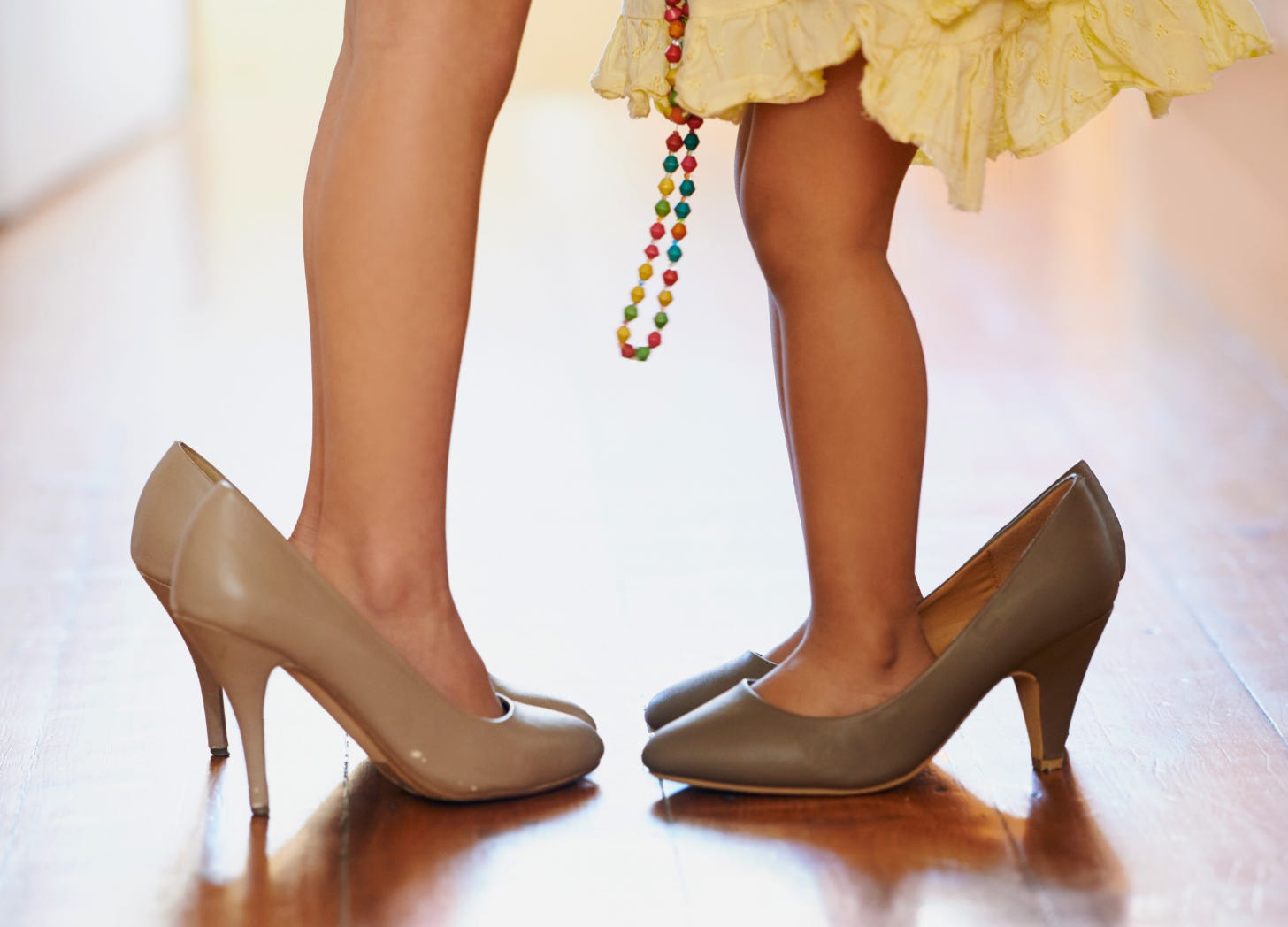
We meet them with wonder.
These brand-new people, full of possibility.
We’re curious about who they’ll become.
And before we realize it, we’ve decided for them.
We stop seeing our kids as people to be discovered and start seeing them only through the role they play in our lives.
From the beginning, we’re encouraged to define them by how they belong to us. My baby. My daughter. My son. My kid.
And slowly, that label—my child—becomes more than a description.
It starts to define how we see them.
It shapes how we speak to them.
How we expect them to behave.
How much room we give them to change.
We don’t mean to flatten them.
But we do.
The Trap We Didn’t Know We Were In
No one sets out to shrink their kid.
We start from love.
From instinct.
From the pull to guide, protect, provide.
But over time, love turns into pattern.
And that pattern quietly becomes the lens we start seeing everything through.
We start answering for them before they speak.
Explaining their behavior when they’re standing right there.
Ordering for them. Finishing their sentences.
Assuming we already know what they think, what they want, who they are.
And because they’re used to being seen this way, they play along.
They stay inside the version we’ve already decided on.
Not because it’s right—
but because it’s familiar.
But underneath that, something gets buried.
Not just their voice, but our ability to hear it.
And if we’re being completely honest, it’s easiest this way.
To keep them the same.
To treat them like they’re still the kid we’ve already figured out.
To believe they’re just a reflection of us—or a version we can still control.
Because if they change too much, we might have to change, too.
We’d have to listen differently.
Loosen our grip.
Rethink what it means to be needed.
That’s not nothing. That’s real.
But if we don’t evolve with them, we’ll end up relating to a version of them that no longer exists. And nothing creates distance faster than that.
The Problem With Only Seeing What’s Ours
When we lock them into the role of my child, we start filtering everything through that identity.
They’re not curious—they’re being defiant.
They’re not independent—they’re being difficult.
They’re not struggling—they’re being lazy.
They’re not quiet—they’re being rude.
We stop responding to what’s real and start reacting to what we assume. And in that gap, we lose them.
We miss the spark of something new, because we’re too focused on what they’ve outgrown. We miss the signals in their silence, because we assume they’re just pulling away. We miss the first cracks in trust, not from some significant rupture, but from the slow erosion that comes with not being seen.
And they lose, too.
They lose the chance to show us who they are right now, and the experience of being known—deeply, accurately, without correction or interpretation.
Being seen as only our child means being cast in a story where someone else is always the main character.
So they learn to edit themselves.
To perform the version of them we’re most comfortable with.
To say less. Or nothing.
And eventually, they stop trying to explain who they are—
because we’re unwilling to revise what we’ve already written.
Their Life Outside Our Story
Our children aren’t just our children.
They’re classmates, teammates, friends.
They’re artists, builders, thinkers, observers.
The quiet one who notices when someone’s left out. The bold one who calls out what’s unfair. The one who rewrites the rules on the playground—or keeps peace in a chaotic group chat.
They are leaders. Learners. Creators.
Future partners. Future coworkers. Future neighbors.
People with their own impact to make.
Whole people being shaped by every moment, not just the ones that happen under our roof.
They have relationships we’ll never see. Thoughts we’ll never hear. Sides of themselves that only come alive when no one’s directing or defining them.
That’s not a threat to our relationship—it’s the purpose of it.
They were never meant to exist only inside our orbit. They were meant to become something that surprises us. Challenges us. Expands the definition of who we first dreamt they’d be.
We don’t have to understand every part of them.
But it’s wise—and worth it—to honor that some of those parts exist beyond us.
Because the more space we make for their full humanity, the more likely they are to share it with us.
Learning to See Beyond Ourselves
Who are our children today?
Not last year.
Not who we hoped they’d be.
Not who they were at ten, or who their sibling is at fifteen.
Today.
Let’s adjust the lens by interrupting our reflex to assume.
To narrate.
To lead every conversation as if we already know the ending.
Let’s be near them without supervising or managing.
Let’s notice what lights them up when no one’s directing them.
How they move. How they joke.
How they respond when they’re not trying to measure up.
That’s them. That’s our access point.
Let’s describe what we notice in real time, without turning it into identity.
“You were so focused during that.”
“You really held your ground.”
“You leaned in when you talked about that.”
Let’s ask questions with no agenda.
Not to correct. Not to steer.
To listen.
Let’s resist the urge to bring up what they used to love, or how they usually act.
And stop narrating who they are with phrases like:
“She’s my shy one.”
“He’s such a handful.”
“She’s the artistic one.”
Our kids aren’t fixed characters.
And our language shouldn’t make them one.
Let’s let them be new.
Let them surprise us.
Let them change.
Let’s stay open.
Match their curiosity with our own.
And let who they are right now be enough.
More Than Ours
It’s not about doing more.
It’s about seeing differently.
The next time we’re with our kid— in the playroom, in the passenger seat, on the other end of the phone—they’ll show us who they are.
Will we let ourselves see them?
Not as who they were.
Not as who we think they should be.
But as they are right now.
Because our job was never to keep them ours forever.
It’s to prepare them for who they’ll be in the world when we’re no longer at the center of it.